Dr. Gymbro
←

#cognitive performance

2 articles
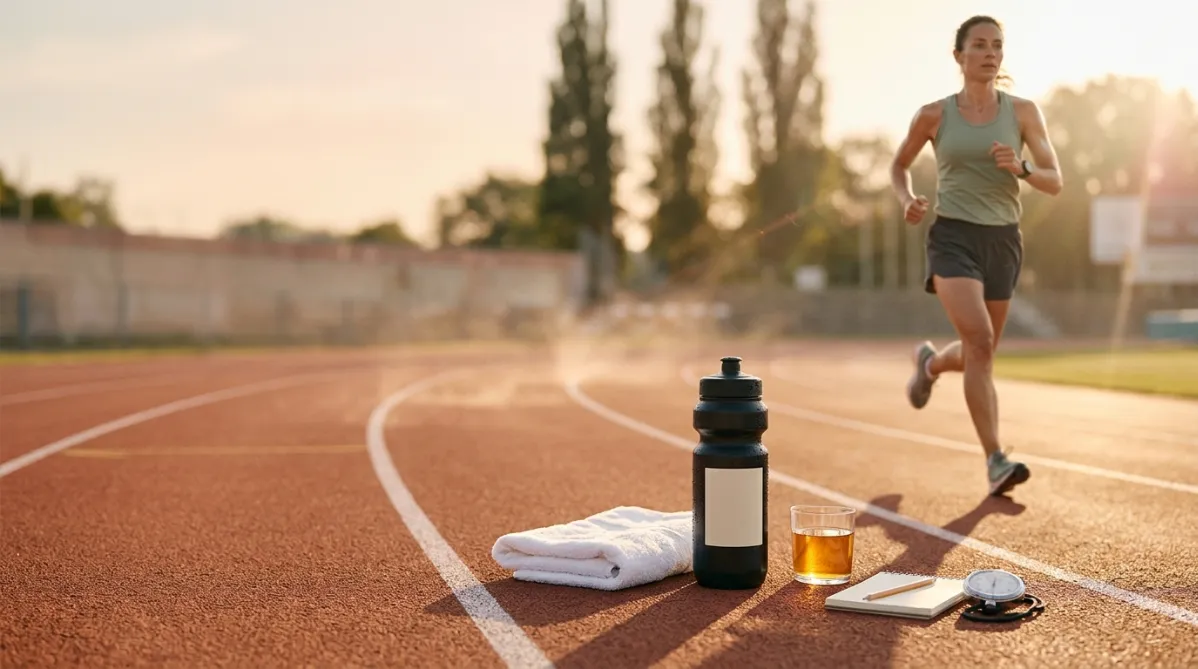
A sunlit outdoor running track in late afternoon, shot from a low angle with shallow depth of field. In the foreground, a matte black bottle with a minimal off-white label sits on the edge of a warm terracotta-colored track lane, beside a folded white towel and a small glass of amber liquid catching golden light. Condensation beads on the bottle. A faint heat shimmer rises from the track surface and softens the background.

In the midground, slightly out of focus, a lean athlete in a sage-green tank top and charcoal shorts runs on a treadmill-like stretch of track, a thin sheen of sweat on their shoulders, their expression focused and calm. Their motion is gently blurred, suggesting endurance and rhythm. Long soft shadows stretch across the lane lines.

The background fades into hazy peach, apricot, and pale yellow tones, with the suggestion of tall trees and a distant stadium wall. Warm sun flare enters from the upper right, creating a subtle glow and a few soft light streaks across the frame.

Subtle editorial touches: a small notebook with a pencil and a stopwatch rest beside the bottle, hinting at data and timing without any text legible. The color palette is warm and muted, with terracotta, cream, sage, and charcoal accents, and a fine film-like grain. The composition leaves open negative space on the left third for a headline overlay. The overall mood is clean, modern, and health-journal inspired, natural and aspirational, with a calm scientific curiosity rather than hype.
nutrition

Ketoni u vrućini: Dulja izdržljivost i oštrija memorija?

BY DR. GYMBRO ·

Ketonska pića najčešće se povezuju s biohackerima koji žele sagorijevati mast, ali najnovije istraživanje pod toplinskim stresom sugerira da bi mogla pomoći i da završite jače. U studiji s 17 treniranim muškarcima, kombinacija ketonskog monoestrija i kofeina produžila je vrijeme do izgaranja na 8,9 minuta nasuprot 7,0 minuta s ugljikohidratima i kofeinom nakon 90 minuta opterećenog trčanja na 34 °C. Točnost radne memorije na zadatku 1‑back također se poboljšala, dok su otkucaji srca i tjelesna temperatura ostali nebitno različiti. Međutim, na zadatku 2‑back, brzini reakcije i zadatku „pogodi‑izbjegni“ nije bilo koristi, a studija je mala, isključivo muška i jednosesijska. Evo što podaci pokazuju, a što ne.
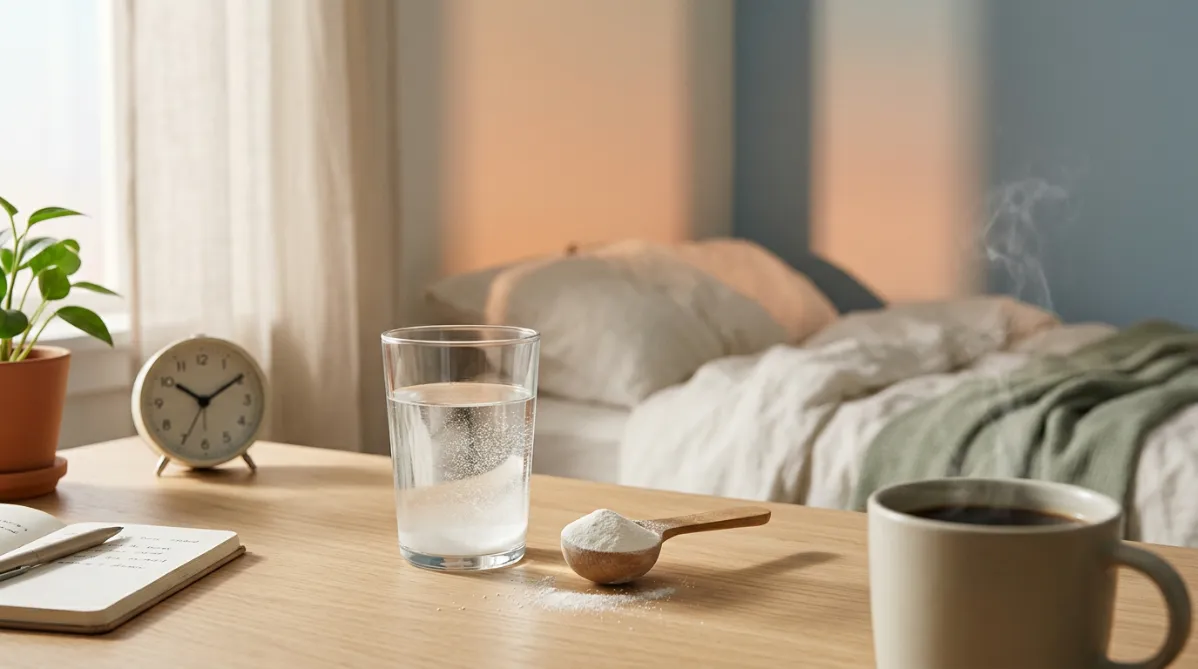
A wide, softly lit morning scene on a pale oak desk beside a window, shot from a slightly elevated three-quarter angle. In the foreground, a clear glass of water is half-filled with dissolved white creatine powder, tiny suspended particles catching the light. A wooden scoop heaped with fine white powder rests beside it, with a few grains scattered across the wood. A matte ceramic mug of black coffee sits slightly out of focus to the right, with a thin curl of steam. Behind them, a rumpled linen-white bed with a muted sage-green throw blanket suggests a sleepless night. Early dawn light spills through sheer curtains and creates long, gentle shadows and a warm peach-and-pale-blue gradient on the wall. On the desk, a minimalist analog alarm clock reads close to 6 a.m., and a small open notebook with a pen lies beside it, its handwriting blurred. A single green plant in a terracotta pot adds a fresh organic touch at the left edge. The color palette is calm and editorial: cream, soft sage, warm oak, dusty peach and muted slate blue. The depth of field is shallow, with crisp focus on the glass and scoop and a creamy bokeh background. The mood is quiet, restorative and contemplative, like a modern wellness magazine or a trendy health journal cover. The composition leaves open negative space in the upper left for title overlay. The image has a natural film-like texture, soft contrast and a clean, minimalist, lifestyle-photography look, with no text, logos or futuristic elements.
nutrition

Jedna doza kreatina od 0,35 g/kg otjerala je zaboravnost uzrokovanu nedostatkom sna za nekoliko sati

BY DR. GYMBRO ·

Studija iz 2024. pokazala je da jednokratna doza kreatina od 0,35 g/kg (≈ 25‑28 g) može privremeno smanjiti zaboravnost uzrokovanu 21‑satom deprivacijom sna, podižući energetske pokazatelje u mozgu i poboljšavajući kognitivne performanse. Iako rezultati izgledaju obećavajuće, doza je pet puta veća od uobičajene dnevne, a rad je bio mali i laboratorijski, pa nema razloga mijenjati svoju rutinu.

This page is available in